Events - Hyvä
Hyvä Developers Paradise 2026: What Merchants Actually Need to Know
April 25, 2026 - by Alexandru-Manuel Carabus
Key takeaways from Hyvä Developers Paradise 2026 in Marbella, explained from a merchant perspective rather than a developer one. POS launch, Magento comeback data, roadmap features, and what it means for your store.
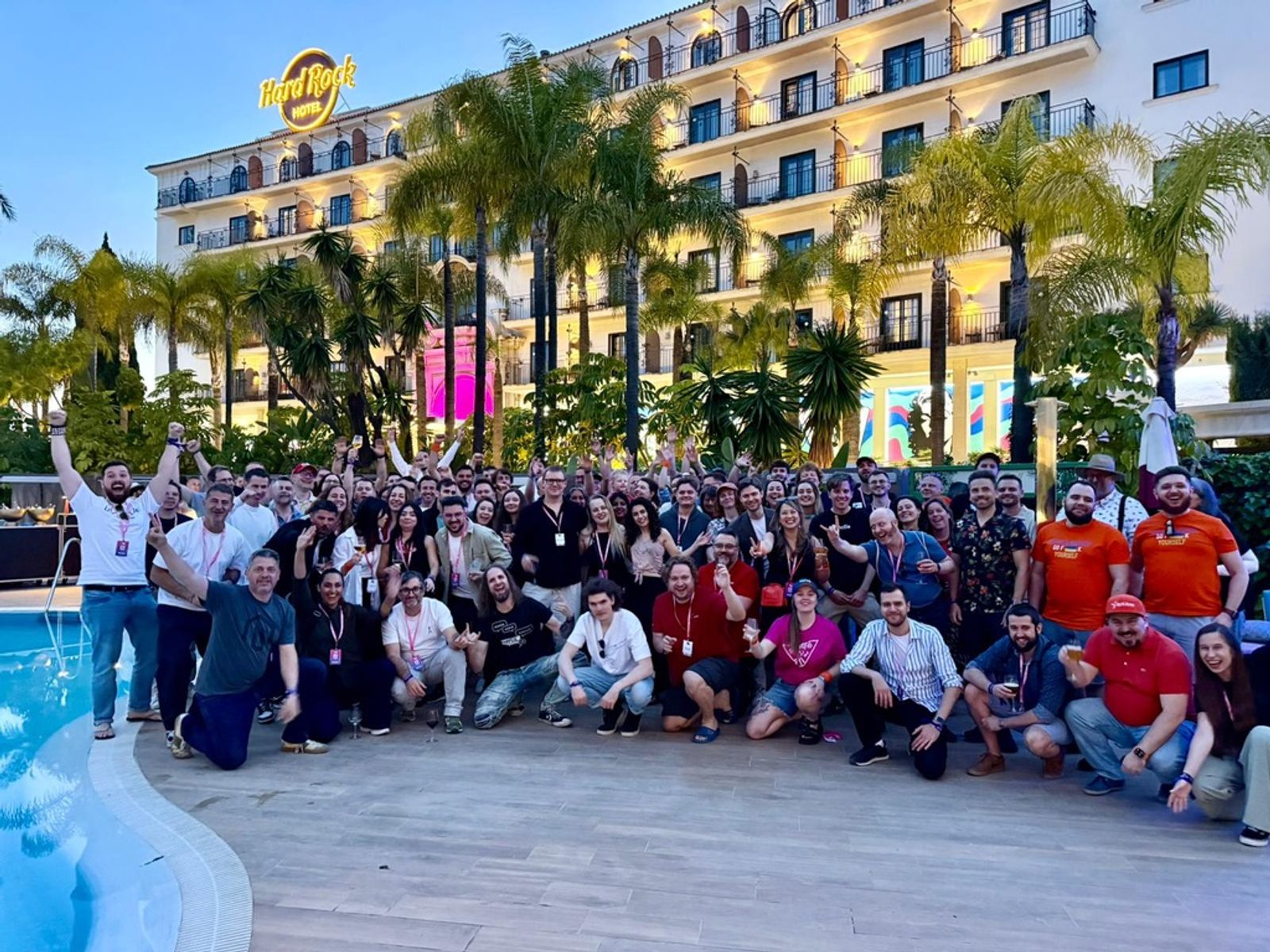
Every April, the Hyvä community gathers somewhere sunny to share what's coming next. This year it was Marbella, and the agenda was packed with announcements that will land directly on your storefront, in your admin, and (most importantly) on your bottom line.
If you weren't there (or if your developer came back buzzing with jargon), here's the plain-English version. We've filtered out the conference noise and kept only what matters if you're running a live Magento or Adobe Commerce store right now.
Magento Is Making a Comeback, and the Numbers Back It Up
For the past few years, the dominant narrative in eCommerce has been that Magento is slowly dying and every sensible merchant should be migrating to Shopify. Sergei, CEO of Amasty (one of the largest Magento extension providers in the world), came prepared to challenge that story with data.
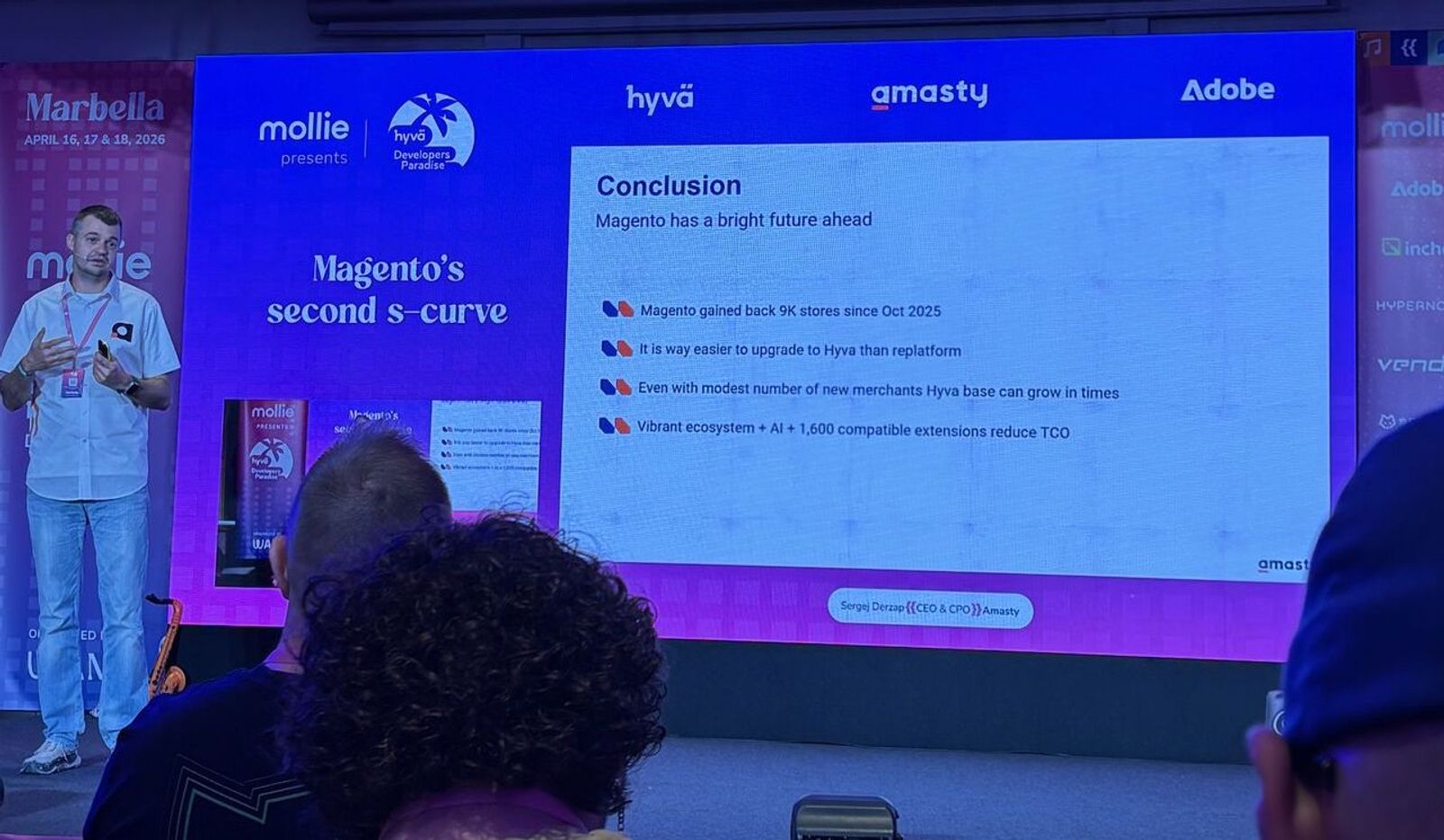
Because Amasty sits across thousands of Magento installations, their adoption figures are about as close to a real-time census of the ecosystem as you can get. What the data shows is clear: new Magento and Adobe Commerce stores are being launched again, and Hyvä Theme adoption specifically is rising sharply. The platform isn't in freefall. It's quietly winning back ground.
The more significant announcement from Sergei was strategic: Amasty is now building every new extension Hyvä-first. That's a big shift. It means the largest catalogue of Magento extensions in the world is being redesigned around the fastest, cleanest frontend in the ecosystem. For you as a merchant, this translates to:
- Fewer compatibility conflicts when you add new functionality to your store
- Less custom development work to get third-party extensions performing correctly on a Hyvä build
- Faster time-to-launch for new features, with less testing and fewer surprises
In short: the extension ecosystem is catching up, and that removes one of the last genuine reasons to hesitate before committing to Hyvä.
Hyvä POS Is Coming, and Its Pricing Model Changes Everything
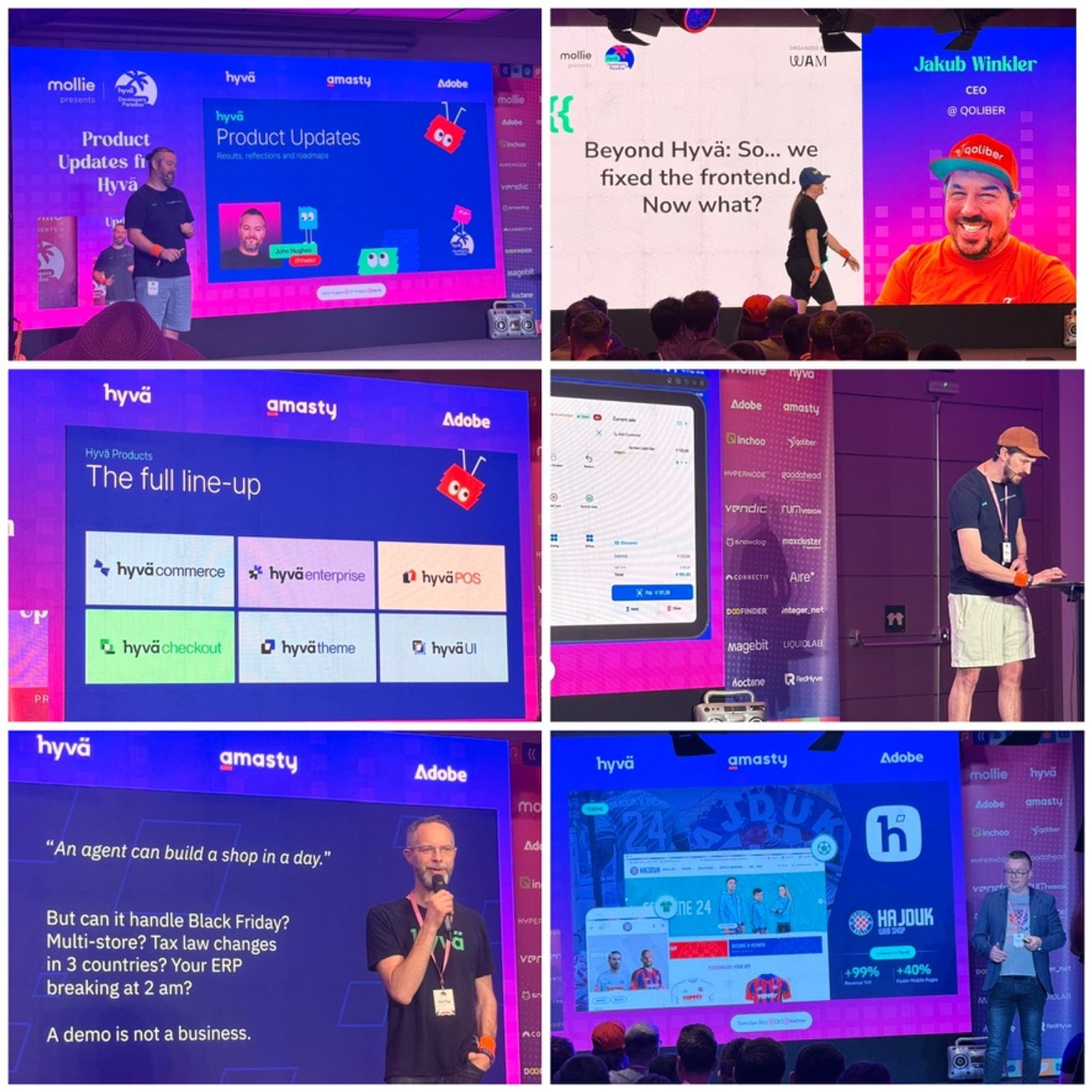
One of the headline announcements was Hyvä POS: a point-of-sale system that runs inside your existing Magento admin, unifying your physical shops and online store in a single back-end.
The feature set is exactly what you'd expect from a serious unified commerce platform: staff management, terminal management, real-time inventory across channels, and complete loyalty integration. Voucher codes, gift cards, store credit, and loyalty points all work seamlessly whether a customer is shopping online or in person. Earn points on the website, spend them at the till. Buy a gift card in store, redeem it online. That kind of deep channel unification is what the industry has been promising for years and rarely actually delivering.
But what really got the room talking was the pricing model.
Hyvä POS will not charge transaction fees. It runs on a fixed monthly cost, regardless of how much revenue your retail locations generate.
This is genuinely disruptive. Most POS platforms (Shopify POS, Lightspeed, and others) tie their pricing to your sales volume. Good month in the shops? Your platform bill goes up. Hyvä is doing the opposite: grow as much as you like, your monthly cost stays the same. For any merchant operating both an online store and physical retail, that's a meaningfully better commercial model, one that actually rewards success instead of penalising it.
How Magento Beat Shopify in a Major Agency Pitch
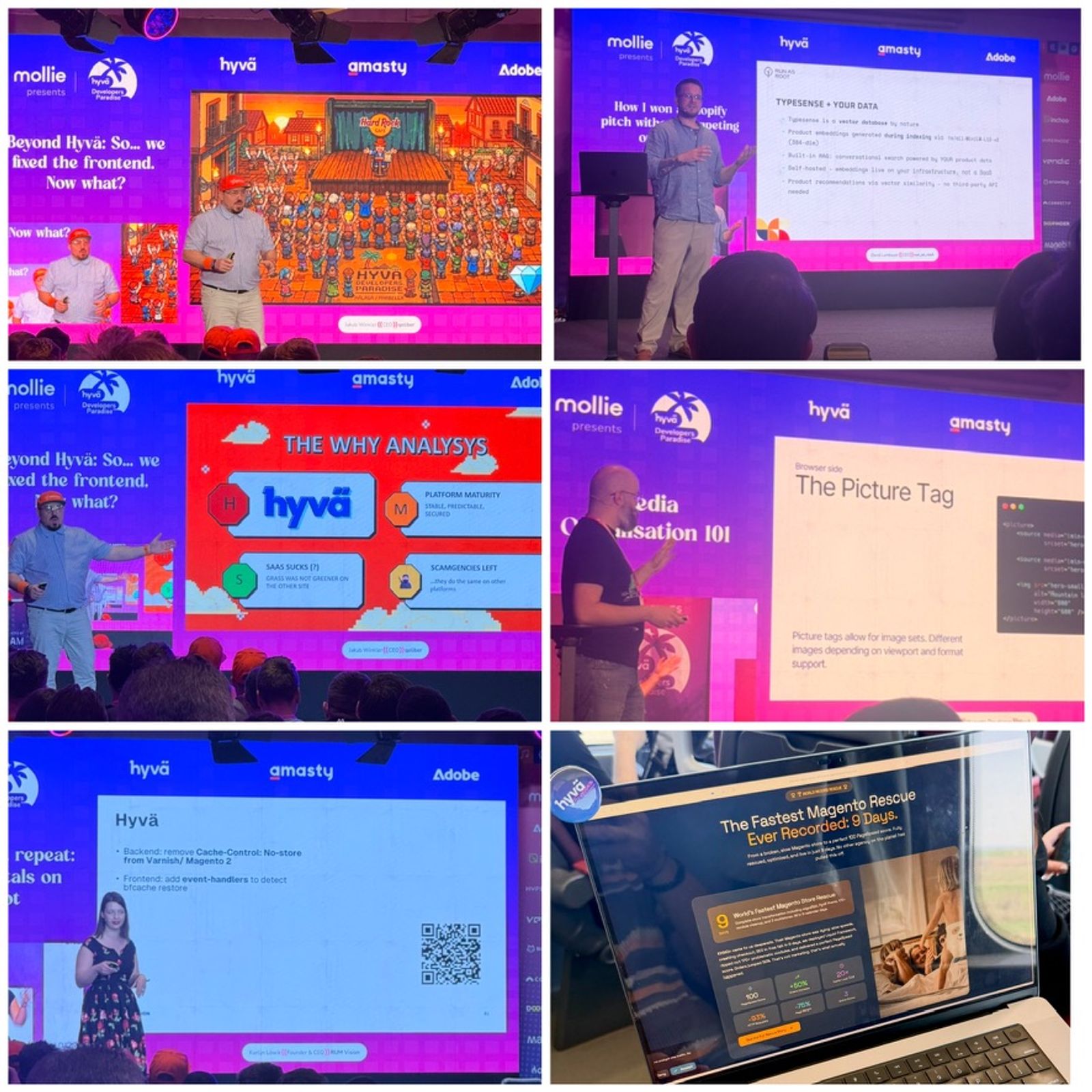
David Lambauer shared the details of a recent competitive pitch where he won a major client for Magento over Shopify, without comparing a single feature, load time, or app ecosystem. His winning argument came down to one concept: data ownership.
On any SaaS platform, your customer data, order history, and behavioural data sit in someone else's database. You can access it through approved apps and tools, but the rules governing what's accessible can change at any time, and Shopify has been progressively tightening which applications can see which customer data. If the platform changes the rules, you adapt on their terms, not yours.
On Magento, that database is yours. You can query it directly, model it however you need, connect it to any CRM or analytics platform, and build AI-powered tools on top of it. Nobody changes the rules on you mid-contract.
As AI becomes the real competitive differentiator in eCommerce, with smarter personalisation, predictive reordering, and better merchandising, the merchants who own their data will pull steadily ahead of those renting access to it. That's the advantage that doesn't show up in a feature comparison spreadsheet, but it's the one that compounds over time.
The Hyvä Roadmap: 2 Features Worth Circling
John Hughes walked through the Hyvä roadmap, and two items stood out for their direct commercial impact on merchants:
Category merchandising: the ability to control how products are displayed and ranked within category pages, directly from the Hyvä admin, without touching a developer. For any store where margin or sell-through rate matters, this is a real revenue tool. Promote high-margin products, surface clearance stock, and run seasonal pushes on your schedule, not the dev team's queue.
Linked products improvements: smarter cross-sells and up-sells that are easier to configure and more effective in practice. Better product associations mean higher average order values, one of the cleanest ways to grow revenue without increasing acquisition spend.
Both features hand more control to your trading and merchandising teams, reducing the volume of small but commercially important tasks that currently sit in the development backlog.
Email Template Customisation Is Coming to the Admin
This one flew a little under the radar on the day, but merchants who've ever tried to update a transactional email without developer help will appreciate it immediately.
Currently, editing Magento's order confirmation emails, shipping notifications, and other system messages requires developer access or a third-party email platform bolted on. It's slow, often expensive, and out of proportion to how simple the change usually is.
Hyvä is bringing email template editing directly into the admin. Your marketing or operations team will be able to update copy, adjust branding, and refine transactional messages without raising a development ticket. Every hour of developer time not spent on email templates is an hour spent on something that actually moves conversion or revenue.
Hyvä CMS: Easier Content Management for Everyone
Several improvements to the Hyvä CMS were announced, all pointing in the same direction: less dependency on developers for day-to-day content tasks.
The goal is to give your content and trading teams genuine autonomy, with faster reactions to trading opportunities, easier promotion management, and more agile landing page updates, without the bottleneck of waiting for a developer sprint. Faster content iteration means faster response to market conditions, which is a competitive advantage in its own right.
Hyvä Checkout Updates: In-Store Pickup Now Included
Hyvä Checkout continues to evolve, and the update most relevant to omnichannel merchants is native in-store pickup support.
Buy online, pick up in-store (BOPIS) is one of the most consistent conversion and fulfilment improvement tools available. Customers who pick up in-store typically convert at higher rates, return less, and often spend more when they collect. Until now, enabling BOPIS on Magento has required custom development or a third-party module. Making it a native Hyvä Checkout feature removes that cost and the maintenance overhead that comes with it.
Media Optimisation: Smaller Images, Lower CDN Bills
One of the quieter but commercially meaningful announcements was a set of improvements to how Hyvä handles media, specifically smarter image optimisation and delivery.
For stores with large catalogues, image assets are frequently the single biggest driver of CDN costs. Serving correctly-sized, efficiently-formatted images doesn't just improve page speed, which directly impacts conversion rate and organic search rankings. It also reduces the monthly infrastructure bill. For high-volume stores, this kind of optimisation pays for itself every month, without any action required from your team.
Closing Thoughts
Hyvä Developers Paradise 2026 felt like a community that knows it's on the right side of the argument. The Magento narrative is shifting, the toolset is maturing, and the announcements this year were notably practical. The features and pricing decisions are designed to make running a Magento store faster, cheaper, and less reliant on constant developer involvement.
A sincere thank you to the Hyvä team and everyone in the community who made Marbella what it was. These events matter, and this one delivered.

Want to know what these updates mean for your specific store? We offer a free Hyvä audit and strategy call for merchants who want a clear picture of what migrating (or optimising an existing Hyvä build) would actually look like. Book your free call or subscribe to our newsletter for monthly updates on everything happening in the Magento and Hyvä ecosystem.
Get the next article in your inbox
One email a month with new articles, speed fixes and the Magento security patches worth applying.