Events - Guides
GPeC SUMMIT October 2026: What Actually Mattered at Our Stand
October 16, 2026 - by Alexandru-Manuel Carabus
On 13 October we were one of the 25 exhibitors at GPeC SUMMIT, at the National Theatre in Bucharest. A massage chair, a board of store problems and 30 eCommerce myths, with answers and numbers.
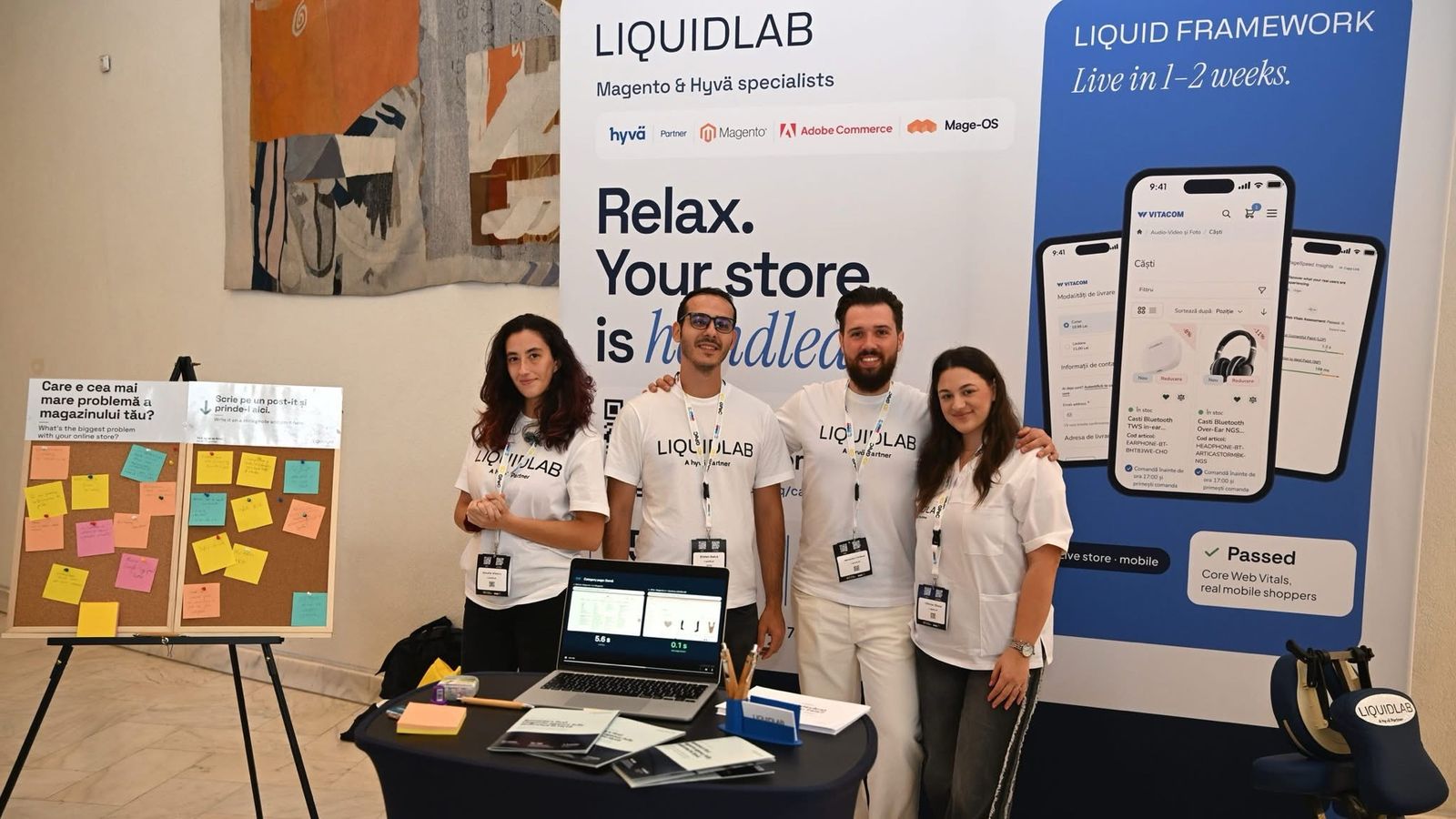
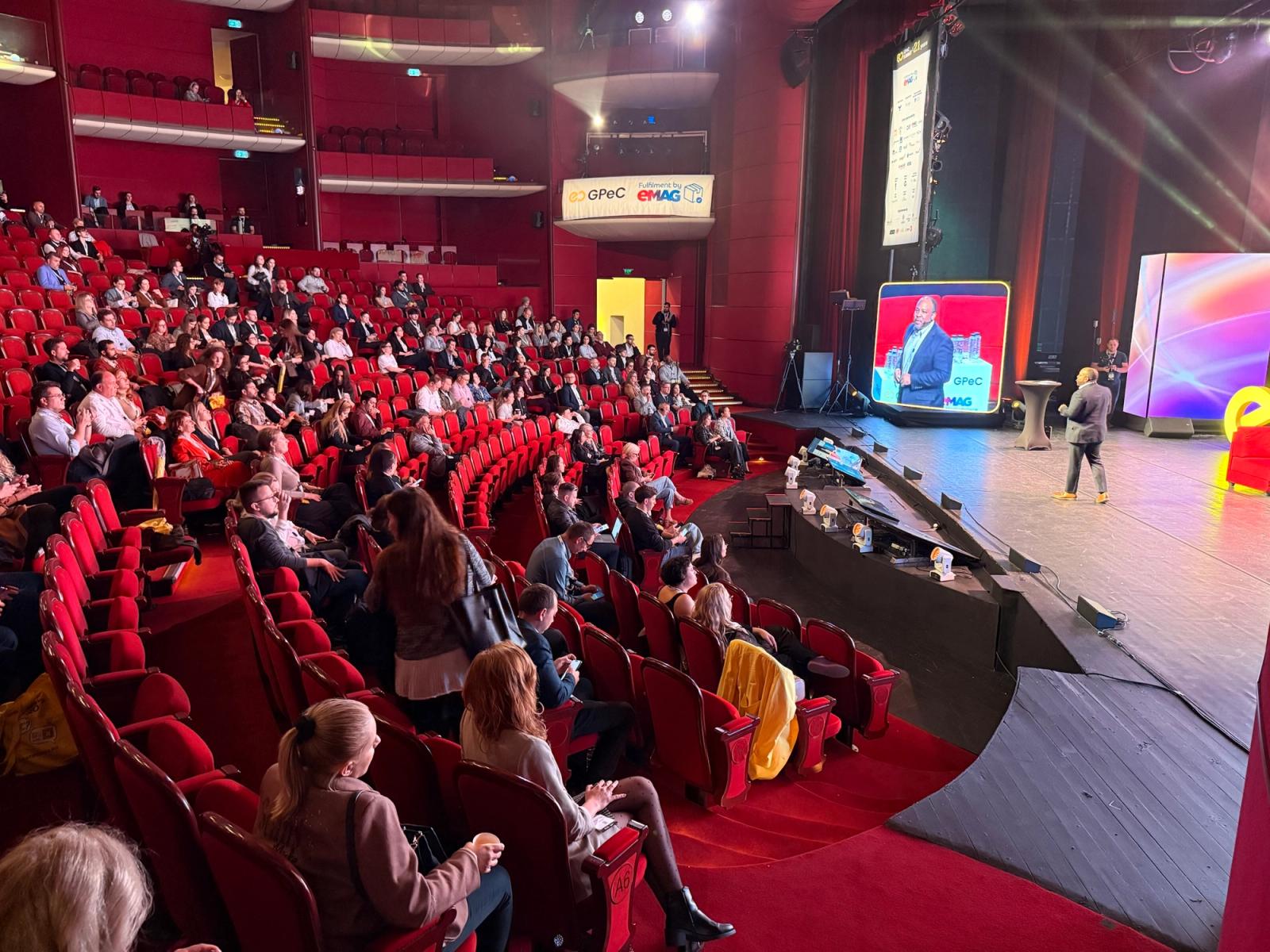
On 13 October we were at GPeC SUMMIT, in the Sala Mare “Ion Caramitru” of the National Theatre in Bucharest. More than 800 participants, 25 exhibitors at GPeC Expo and, among them, the LIQUIDLAB stand.
It was our second GPeC with a stand this year. The first was on 26 May, at GPeC EXPO. This time we brought three things: a massage chair, a board where merchants could write down their store's biggest problem, and 30 cards with eCommerce myths.
Here is what actually mattered, and what you can take from it if you run an online store.
“Relax. Your store is handled.”
The message on our stand was short: “Relax. Your store is handled.” On the visual, the phones showed the Vitacom store, one of our clients.
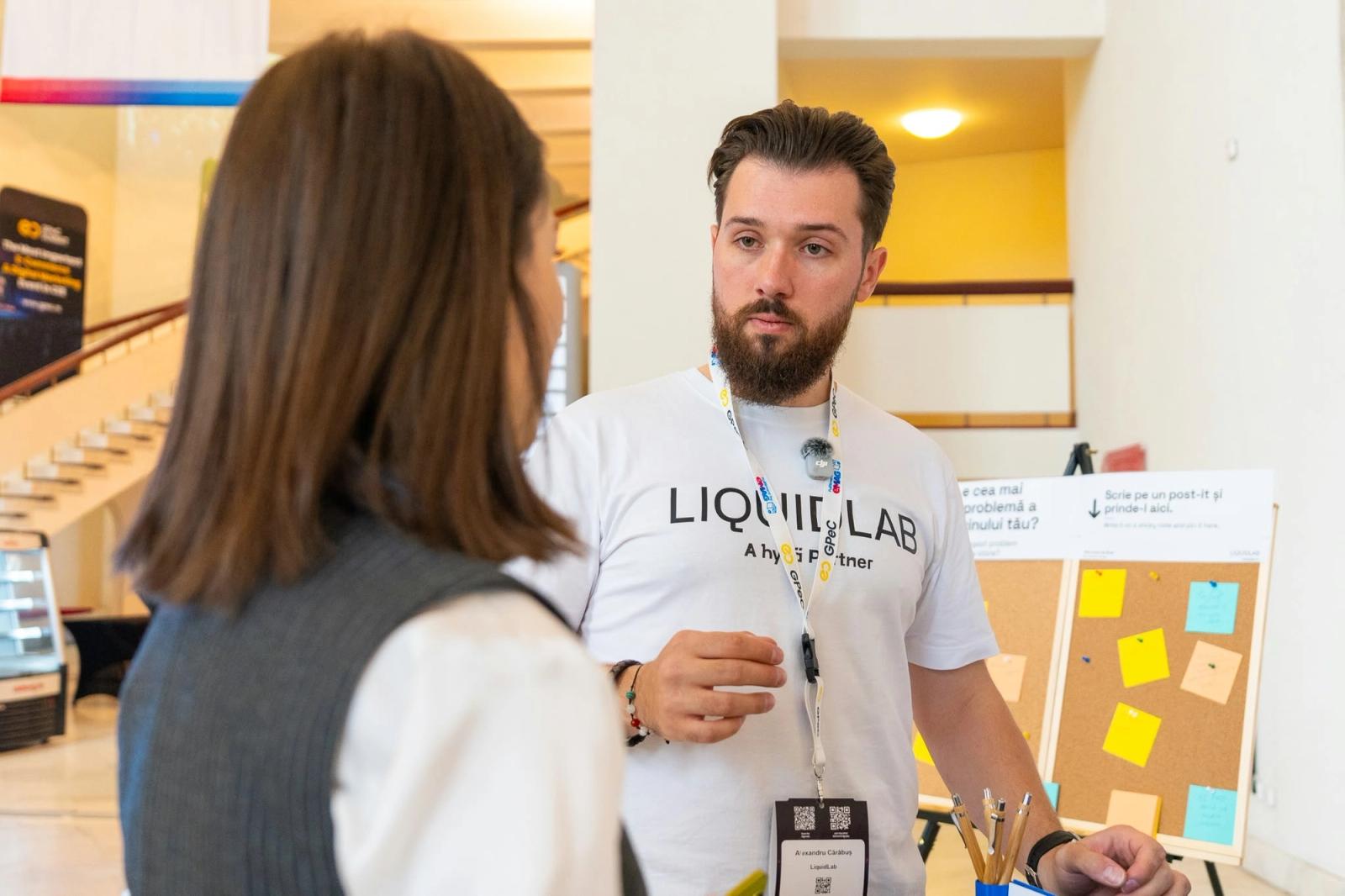
So the message would not stay on the banner, we brought a massage chair. While a visitor sat in it, we talked about their store. For most merchants, October is the month before Black Friday, which is exactly when nobody relaxes.
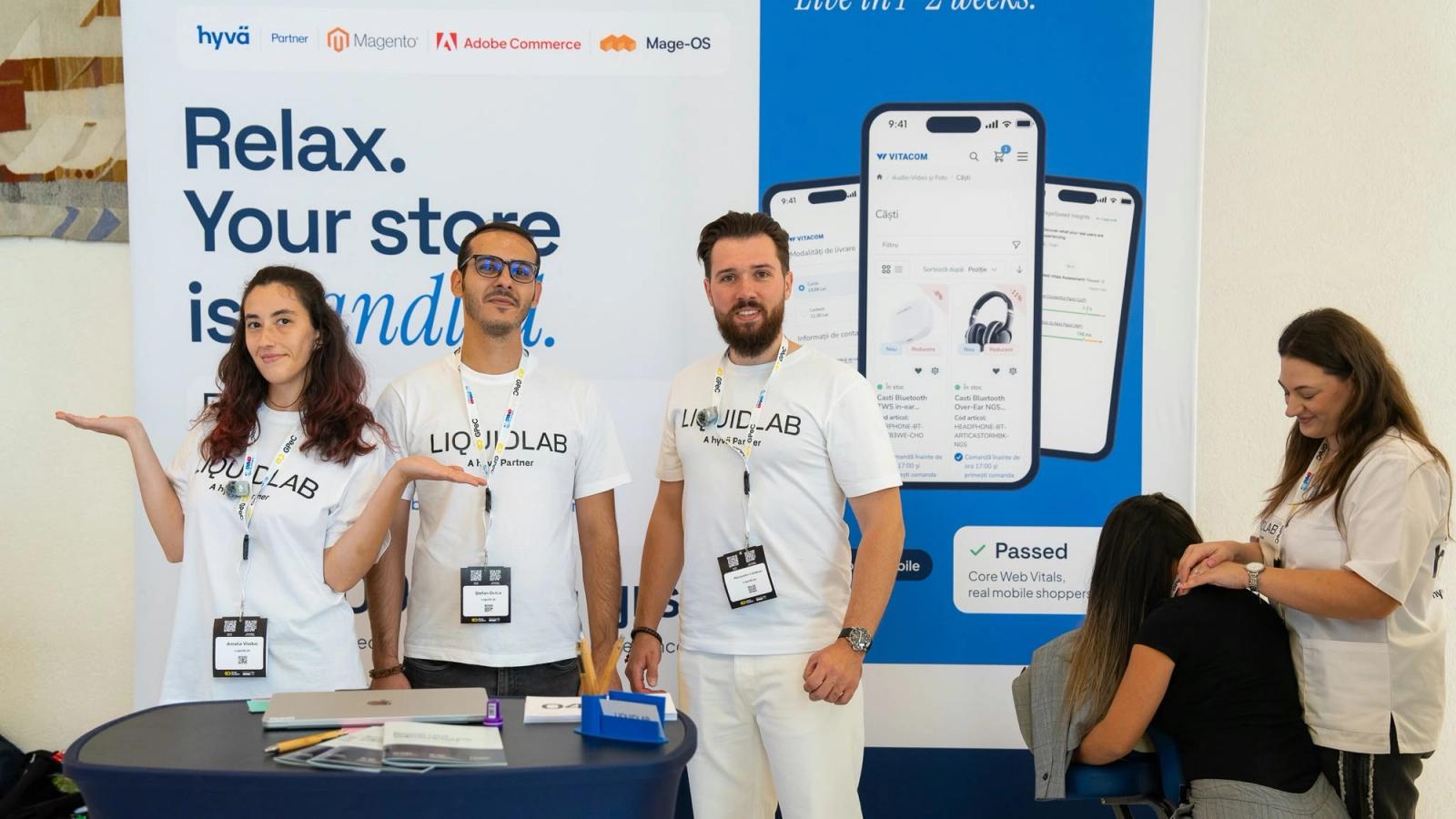
Five of us were on the stand: Alexandru-Manuel Carabus (CEO and CTO), Alexandru Constantinescu (Principal eCommerce Architect), Stefan Dulca, Amalia Vladuc, and the massage specialist who came with us.
The Board: “What's the Biggest Problem With Your Online Store?”
Next to the table we put two cork boards with a single question, in Romanian and English: “What's the biggest problem with your online store?” Visitors wrote it on a sticky note, without their name or company, and pinned it up.
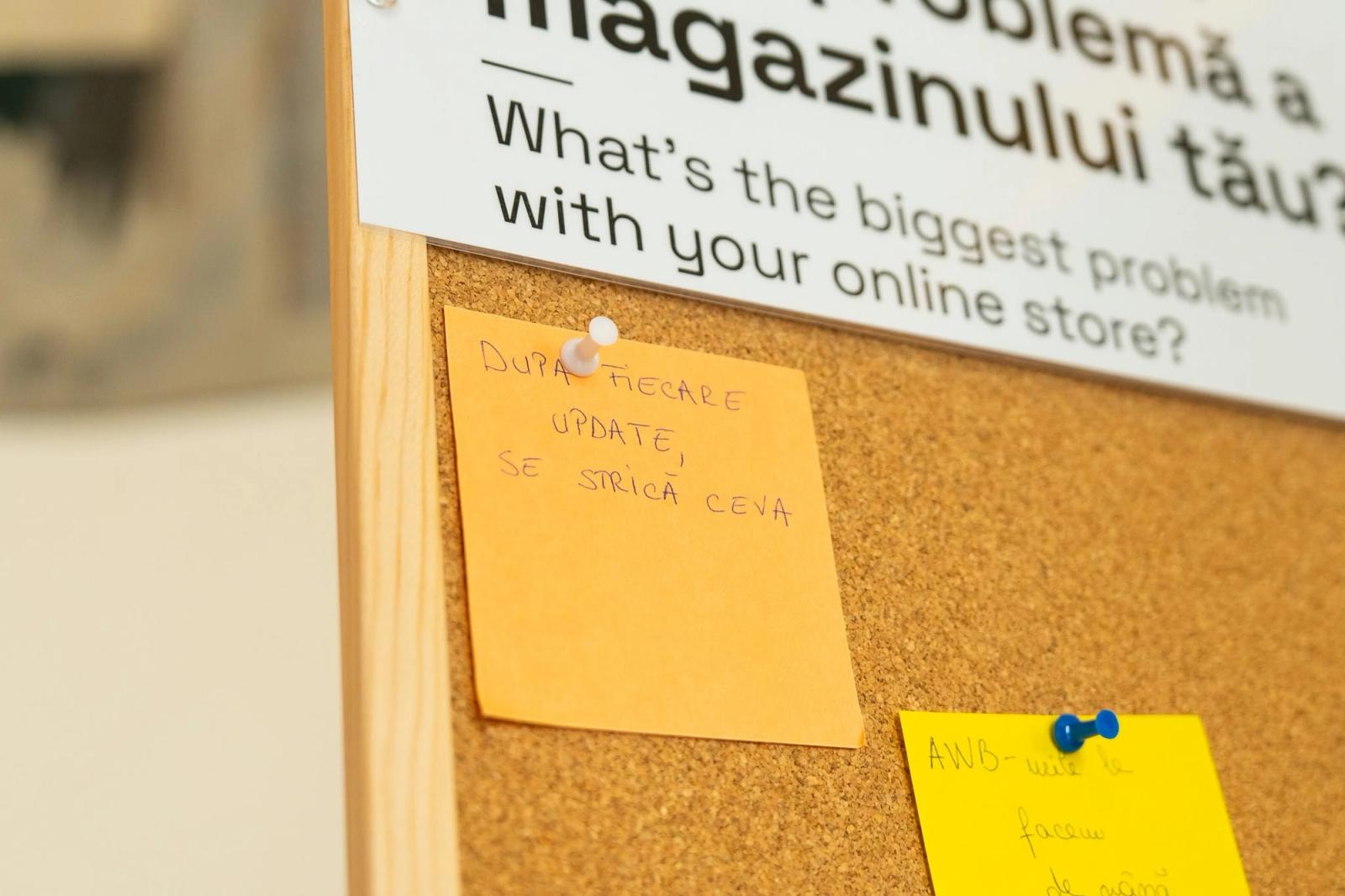
We chose this format because at a stand, people rarely tell you their real problem straight away. On an anonymous sticky note, they write it. The boards started almost empty and filled up during the day.

We photographed every one of them. In merchants' own words, they tell us what is worth writing about next.
True or False: 30 eCommerce Myths
The third thing on the table was a stack of 30 cards. Each one carries a statement we hear often: 8 are true, 22 are false. A visitor drew a card, read the statement out loud and said “True” or “False”. We answered with numbers.
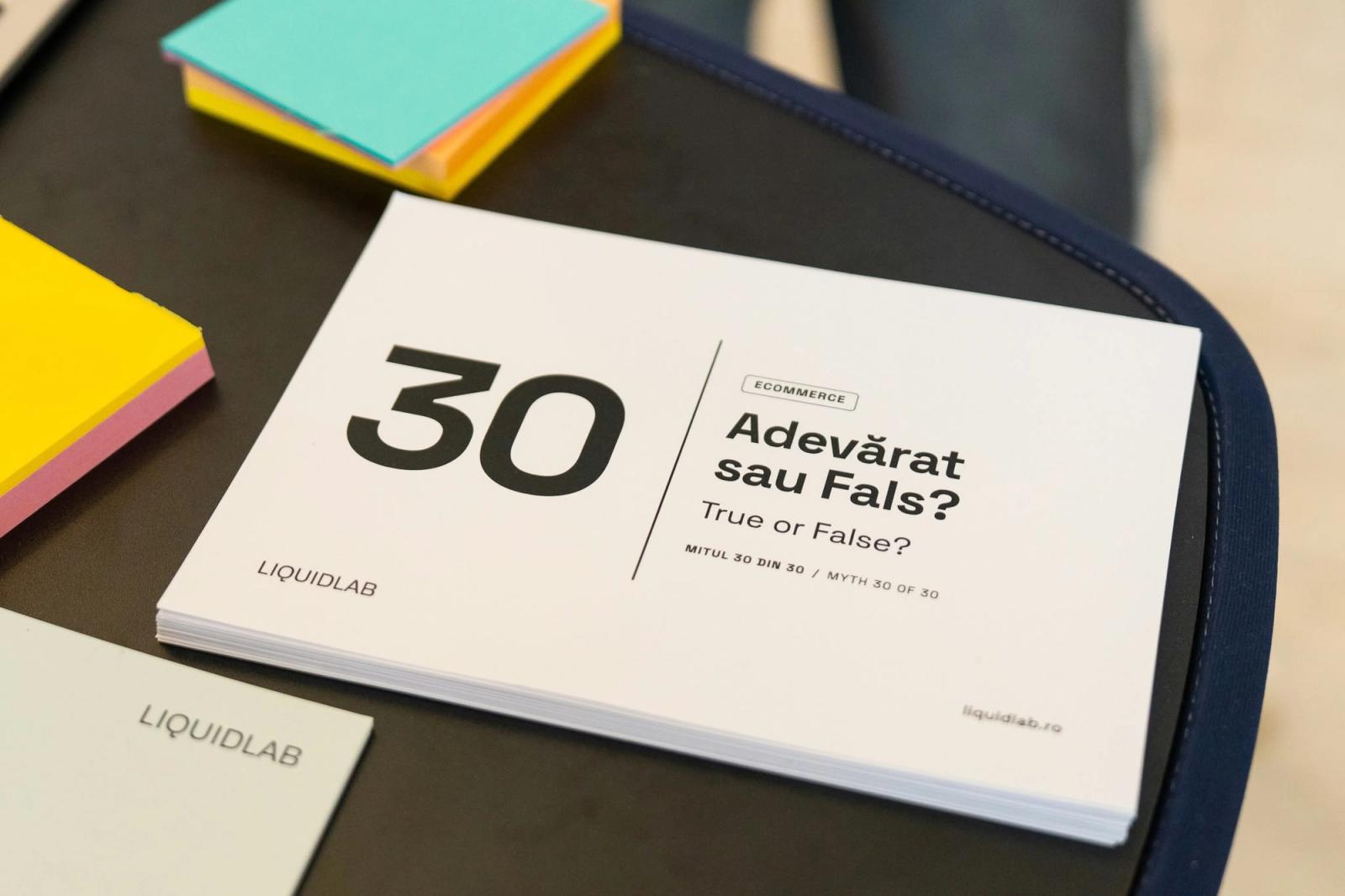
19 of the 30 cards do not mention Magento at all. They are about abandoned carts, speed, security and platforms in general, because GPeC brings merchants from every platform. Here are six of them, with the answers.
“Most shopping carts are abandoned.” True.
About 7 in 10, going by the average that Baymard Institute calculates (70.22%). The top reason: extra costs that only appear at checkout, such as shipping or taxes. Show the delivery cost as early as you can, not at the last step.
“If you force customers to create an account, you lose orders.” True.
Almost 1 in 5 shoppers (18%) abandon an order because they are asked to create an account, again according to Baymard. Let them order without one. How a checkout looks for Romanian stores, with local payments and couriers, is in our guide to Hyvä Checkout for Romanian stores.
“A few tenths of a second of load time don't change sales.” False.
A Deloitte study for Google found that retail sites that got 0.1 seconds faster on mobile saw 8.4% more conversions.
“A bigger server fixes a slow store.” False.
At Vitacom, the server took almost 16 seconds to respond, even though it ran on 8 times more hardware than it needed. After we removed about 180 modules and cleaned up what was left, response time came down to 12 milliseconds, measured with Google PageSpeed Insights on the live store. The details are in the Vitacom case study.
“If I switch to Hyvä, my store automatically becomes fast.” False.
Hyvä makes the frontend much lighter, but it does not fix a server that takes 15 seconds to respond. The theme is rarely the only cause. Usually the culprits are unaudited modules, wasteful queries and a misconfigured server. We wrote more about why a Hyvä store can stay slow.
“Small stores aren't a target for hackers.” False.
Attacks are automated: bots scan the whole internet and do not pick by size. When the SessionReaper attack wave started, 81% of Magento stores had received attack traffic within ten days, according to Sansec. What that means for a small store is in our SessionReaper lessons.
On Stage
In the Sala Mare, the speaker line-up included Neil Patel, Tudor Manea (CEO of eMAG), Lucian Baltaru (CEO of Sameday Group), Adrian Mihai (CEO of FAN Courier) and Irina Dietrich from Google. The full list is on the GPeC website.
Neil Patel took the stage at 10:35 with “From Google Rankings to AI Answers: How to Stay Visible”, delivered in English with simultaneous Romanian translation.
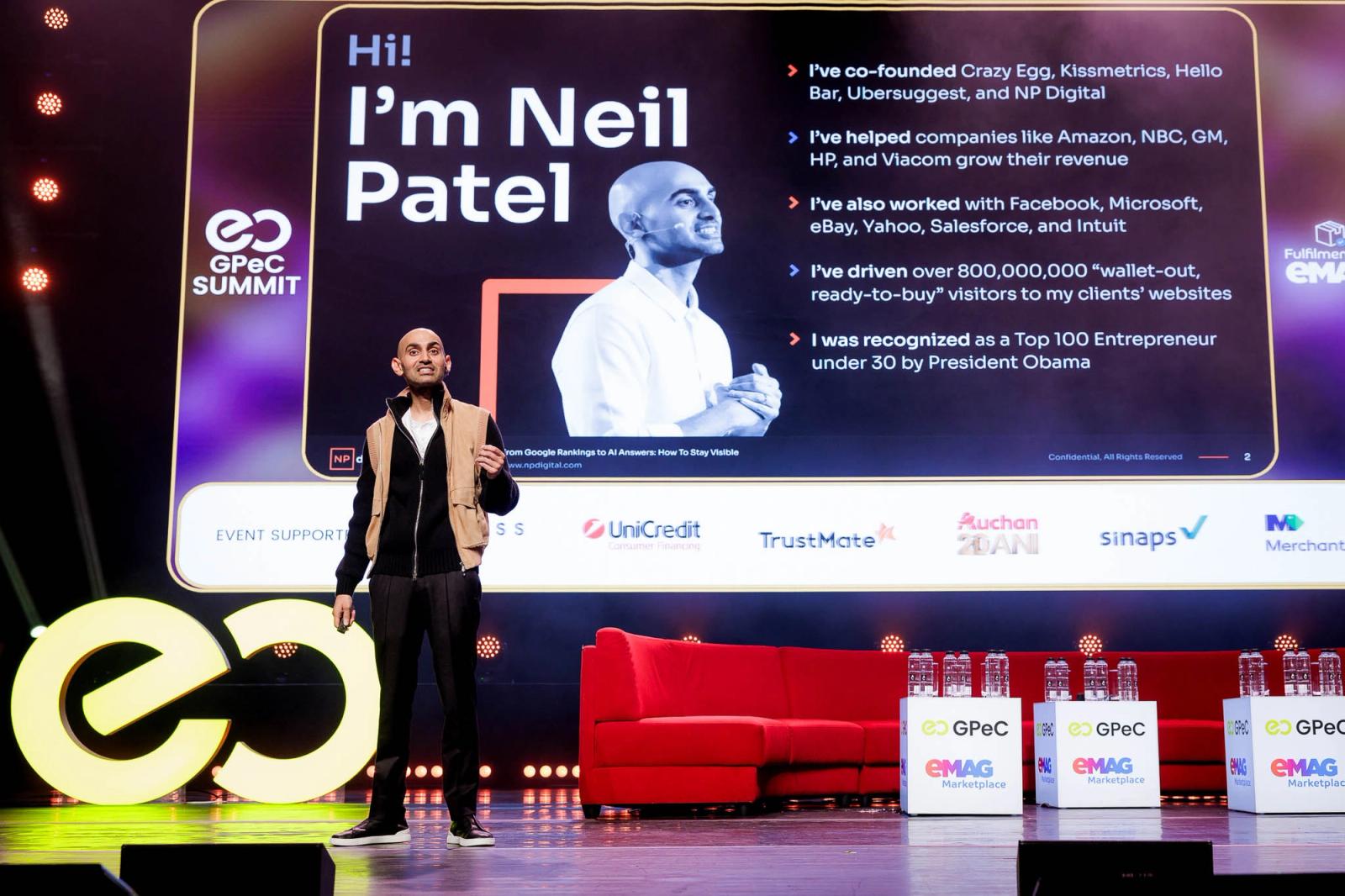
Photo: GPeC
What to Take Home If You Run an Online Store
- Checkout: show the delivery cost before the last step and let customers order without an account. These are two of the surest places to win back orders.
- Server: before you pay for a bigger one, find out what the one you have is doing. At Vitacom the problem was about 180 modules too many, not too little hardware.
- Speed: measure it on phones, with real shoppers. Even 0.1 seconds shows up in conversions.
- Security: apply patches when they come out, however small your store is. Our 2026 security checklist is a good place to start.
- Backups: test them. A backup you have never restored is a hope, not a backup.
Thank You
Thank you to the GPeC team, especially Andrei Radu, Ioana Anescu and Marilena Anghel, for the organisation and for their help in the days before the event. And thank you to everyone who stopped by the stand, drew a card or left a sticky note.
Want to know what your store would write on that sticky note? Book a free strategy call and we will tell you what is worth fixing first.
Get the next article in your inbox
One email a month with new articles, speed fixes and the Magento security patches worth applying.