Hyvä
Hyvä vs PWA and Headless Magento: The Honest Cost of Going Headless
September 15, 2026 - by Alexandru-Manuel Carabus
Going headless or PWA sounds like the modern, fast way to build a Magento storefront. In practice it splits your store across two teams, invites endless is-it-the-API-or-the-frontend blame-shifting, and buries real cost in operations. Here is the honest comparison, and why Hyvä gets you the same 90+ speed on a single stack.
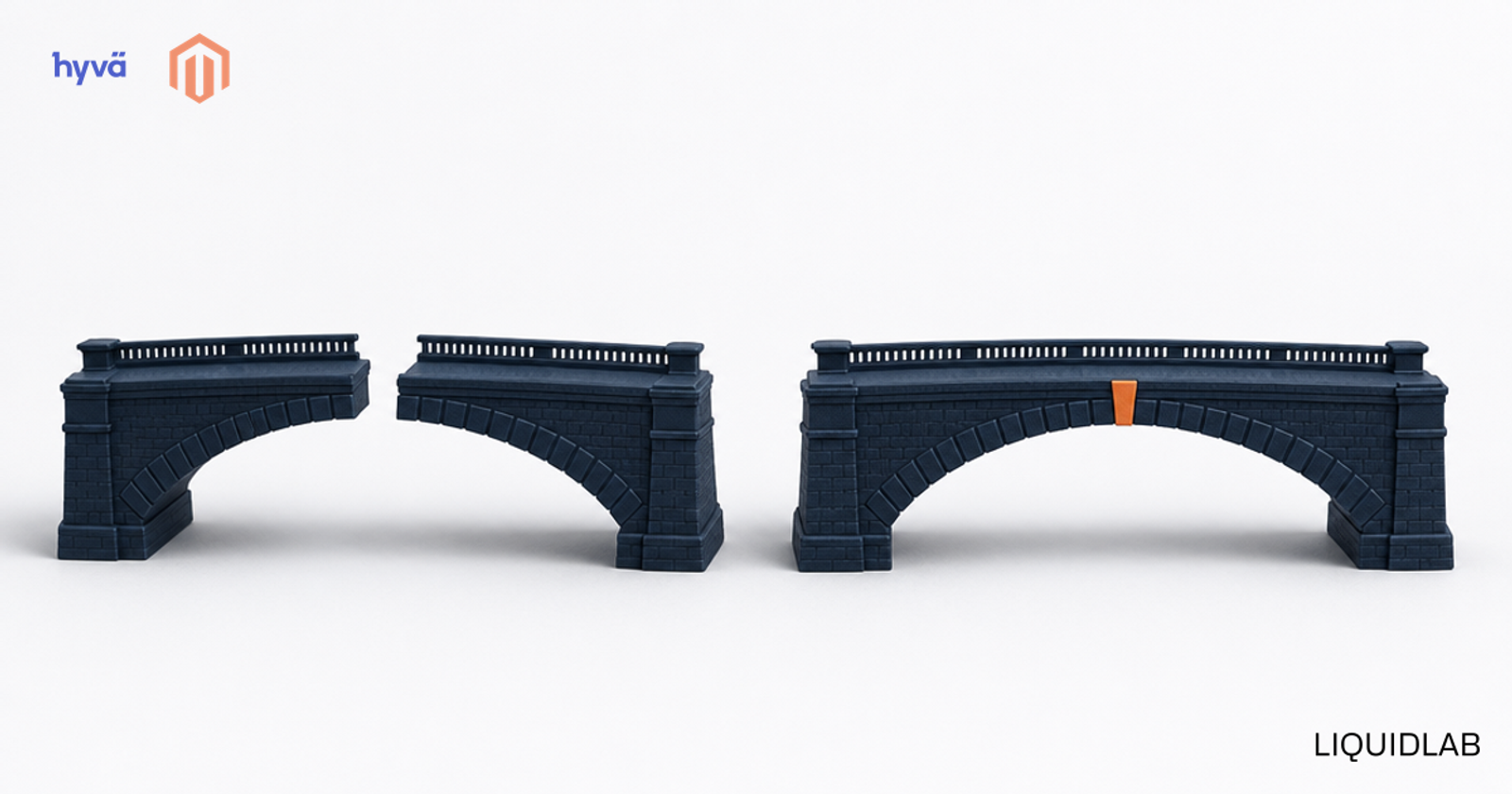
We build fast storefronts, so we get asked constantly whether a store should go headless or PWA. It is the modern pitch: decouple the frontend, build it in React, promise speed and flexibility. For most mid-market Magento merchants, our honest answer is no. Here is why, without the marketing.
What headless and PWA actually mean
Headless means decoupling the frontend (React or Vue) from Magento and talking to it over the API. PWA is the app-like frontend built on top of that. You run a separate frontend application plus Magento as an API backend. It is a real architecture with real use cases: enormous catalogs, app-like experiences, and multiple channels sharing one commerce API.
The cost nobody quotes you: two teams
This is the central hidden cost. Headless means two codebases and usually two skill sets: a React/JS frontend team and a Magento/PHP backend team. Two teams, two build pipelines, two sets of dependencies to keep secure and up to date. For a mid-market store that is a permanent staffing line, not a one-time build cost.
The blame-shifting tax
When something breaks in a headless setup, the first hour goes to deciding whose problem it is: the API or the frontend. Is the cart bug in Magento GraphQL or in React state? Is checkout slow because of the backend or the client bundle? Two teams point at each other. On a coupled stack, one team owns the whole path and simply fixes it. This tax is invisible in a proposal and brutal in production.
Where the money actually goes
The operational overhead is the real cost. A headless build runs separate frontend hosting and a CDN, plus the Magento backend, plus the middleware and API layer, plus monitoring for all of it. It is not unusual for a mid-market headless build to carry a large in-house team and five-figure monthly hosting and monitoring bills before a single feature ships. The speed you were promised comes with an operations department you now have to fund.
What you were actually chasing: speed
Strip away the architecture talk and what merchants want from headless is speed and a modern experience. Here is the thing: you can get 90 to 100 on PageSpeed on Magento without going headless at all. Hyvä is a modern frontend (Tailwind plus Alpine, a fraction of the JavaScript) that hits the same speeds on the standard Magento stack, one codebase, one team. We wrote about the frontend itself in Hyvä is now fully open source, and about how we hit those speeds in our Core Web Vitals guide.
And this is not theory. Vitacom, on Hyvä and not headless, went from a mobile PageSpeed of 12 to 100, on a server eight times smaller. Same Magento, one stack, one team. We covered it in the Vitacom case study. That is the speed headless promises, without the two-team overhead.
When headless is actually the right call
To be fair, headless earns its cost for a specific band. Genuinely enormous catalogs, true multi-channel (web plus native app plus kiosk sharing one commerce API), or an in-house frontend team that already exists and an experience so custom no theme can express it. If that is you, headless is a legitimate and powerful architecture. For the mid-market store that just wants a fast, modern, maintainable storefront, it is a lot of complexity to buy speed you can already get on Hyvä. We laid out the wider frontend decision in the should-you-migrate-to-Hyvä decision tree.
How we build it
Our default is Hyvä on one Magento stack, delivered and maintained as the Liquid Framework, so performance and security are one accountable party’s job, not split across two teams pointing at each other. If you are weighing headless right now, book a free strategy call and we will tell you honestly whether you are in the band that needs it.